Nathan Buckley is the Screen Programmes Producer at the Science and Media Museum in Bradford. As part of this role, he produces the Yorkshire Games Festival.

The Science Museum Group (SMG) has two approaches to preservation: Collect and Engage. Collect encompasses the official collections and preservation side of things. Engage refers to how we actively engage our audiences with our collections, historical and contemporary technology and industry, and promote fun, engaging participation with gaming heritage culture for visitors of all ages. We mainly accomplish this through our Yorkshire Games Festival which takes place annually in Bradford, and our Power Up brand which is present at the Group’s museums in London, Manchester and Bradford.
Collection
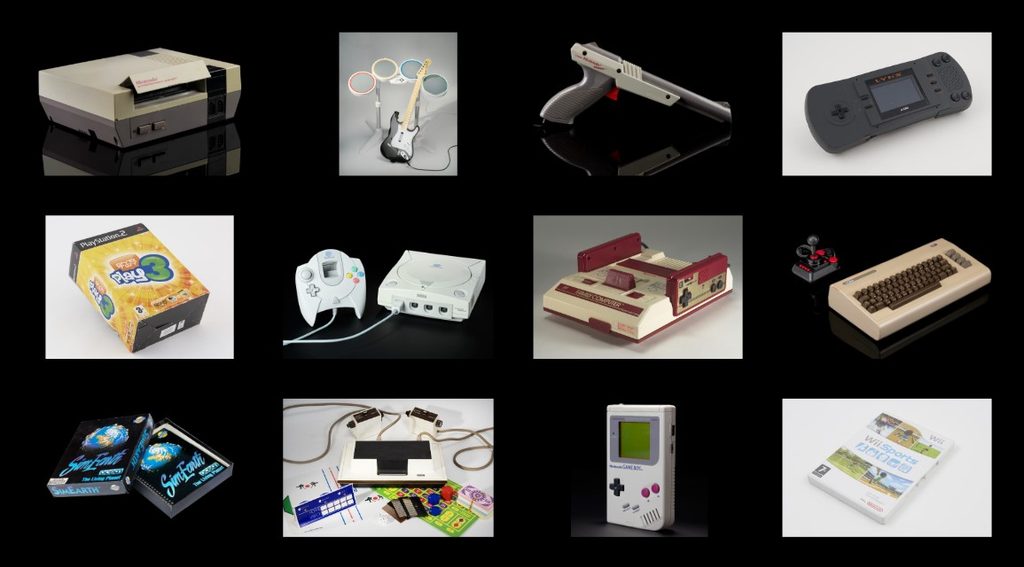
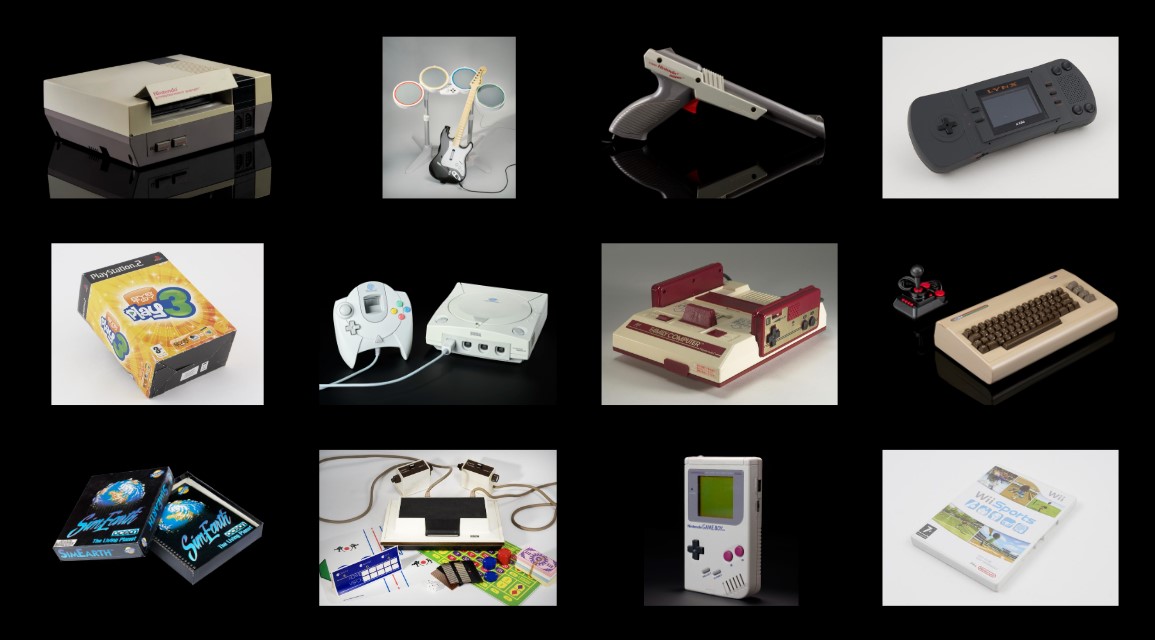
The collection at SMG included several hundred objects including consoles, games, prototype controllers, ephemera and much more. For several years SMG didn’t really know how to best organise this collection, with objects being split across a number of existing collections, mainly computing and new media. Since then SMG has played a bigger and bigger role in sharing video games with audiences, especially in the last decade – our understanding of audiences, industry and the collection has grown to the point that we were able to officially set up our Videogame Technology collection two years ago which now contains around 800 objects.
The remit of this collection mirrors the way the group approaches all of its other collections – looking at the technology, processes and practices behind a medium and their impact on culture and society, rather than the output of that medium. For instance, here at the Science and Media Museum, we largely collect cameras, projectors and television sets rather than photographs, films and television programmes. Although of course, it’s never that easy and especially with a medium as interactive as video games, the line between process and product isn’t always clear cut.
Challenges
SMG is still early in its digital collecting journey with only a two-person team across the entire group. Currently our focus is looking at developing the backend infrastructure of how we can best collect digital objects – we started small, collecting a meme, with more ambitious prospects such as collecting code, game engine files etc. further down the line.
As a national institution with a national collection we also have a responsibility to allow public access to our collections which adds another barrier, opens up copyright issues etc
Like all collections in all museums, we’re trying to help people understand the context of the objects we collect based on the time and places they are from. But video gaming is an especially difficult medium to do this in because so much of the understanding of a game or a console comes from the playing of it. It’s comparatively easier to demonstrate the importance of developments in photographic or filming technologies because either it is physically observable in the objects themselves (compare an early wet plate camera to a smartphone) or the outputs of said technology, even in reproduction, more evidently communicate the nature of their making – think of the aesthetics of a technicolor film, or an early digital camera. Gaming technology, by comparison, holds more of its story in the experiential nature of their use – seeing an early NES controller doesn’t come close to communicating the tactility of pressing its buttons and feeling their response time on screen. You can only watch a film the way it is but everyone plays differently.
Engagement

This brings us on to the second approach to preservation: engage.
Through opportunities to actively play games new and old, interact with the games industry, and engage with the concepts and culture at the heart of our collections we aim to engage audiences of all ages with the continuing story of gaming heritage. The main avenue that I’m engaged in personally is the Yorkshire Games Festival (YGF) which is going into its 11th year next year.
The YGF is an annual event celebrating games design, production and culture. Taking place at the National Science and Media Museum, the festival draws on our unique collection of digital technologies to inspire future developers and cultivate an ethos of learning through play, while celebrating the rich games development heritage of Yorkshire. Through four distinct strands of activity, the festival aims to provide fulfilling experiences for its target audiences and engage visitors with the museum, the gaming industry and the collective games development networks across the north of the UK.
Four strands of engagement
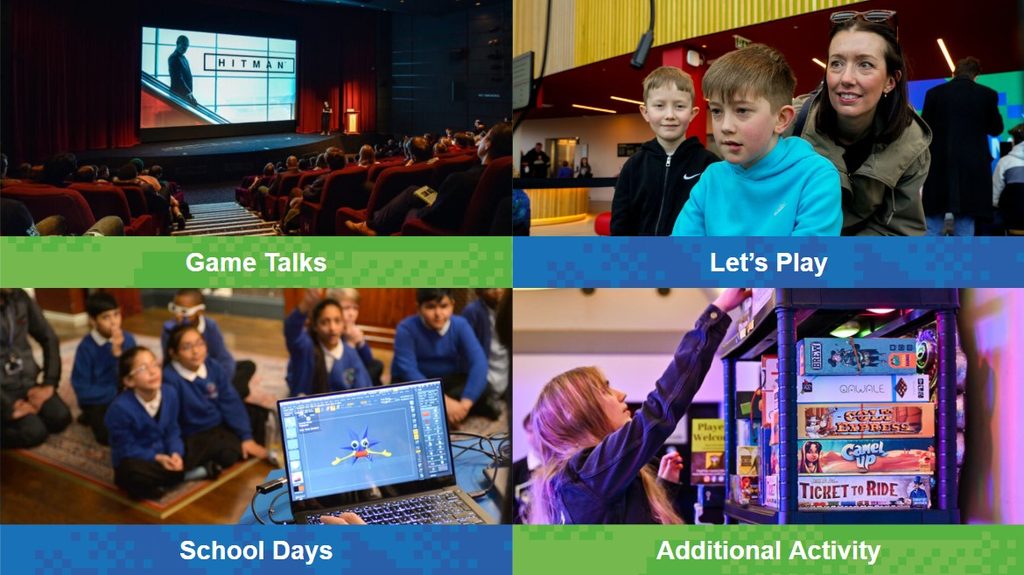
Game Talks – this is our lecture style event which gives college and early university age students the ability to hear from industry professionals across a range of disciplines and career levels about current practices and pathways in games development. The event sits across two days and usually has around 8 – 10 speakers, both national and international.
School Days – these are our KS2 & KS3 level structured visit days delivered in house by our learning team. Often working with a variety of partners, they allow pupils the opportunity to take learning out of the classroom, expand their horizon of possible career options in the games industry, and practice STEM related skills such as logic and problem solving in video game related activities.
Let’s Play – a loosely convention styled event which is aimed at engaging families during school holidays, providing opportunities to play games in development from indie devs, encourage intergenerational play, celebrate gaming culture, and engage with the museums collections directly through handling activities, face to face time with our curator, and tours.
Additional Activity – this encompasses anything that doesn’t fit into the above and any experimental activity – including things like board game evenings.
Each Game Talks event features a Careers Lounge where students have the opportunity to have candid conversations with developers, giving them a really important networking opportunity. Because we’ve been running long enough now we’ve been able to see examples of people for who the festival has and continues to be a milestone in their journey, whether that being visiting Let’s Play with their family and then returning to Game Talks as a student, or going from being a student at Game Talks to being a developer delivering a talk of their own.
Power Up is the group’s other offer which engages visitors with gaming heritage. These exist as a kind of bridge between a commercial experience like you might find at something like Arcade Club and a fully fledged exhibition. They have a cost of entry and the focus is on playability over authenticity, so there’s a fair bit of emulation going on, but it does give people the opportunity to experience some of the tactility I was talking about before as well as a taster of some of the other ephemeral gaming experiences which are difficult to find nowadays – for instance in the London site you can see there is an opportunity to play 16-player networked Halo, replicating a LAN style setup, and at our museum in Bradford the experience focuses on more retro and arcade with mostly original cabinets.
Leave a Reply