The long-term sustainability of our playable heritage is under threat. Our ability to play, learn from, and investigate the history of videogames can be threatened by failures to protect, preserve and understand our past.
As new game systems emerge, older game systems become obsolete; data and code become unreadable; servers and online services go permanently offline; the knowledge and insights of developers, players, critics and commentators are irretrievably lost.
Adding to this avalanche of lost material, there is also a dearth of meaningful co-ordination. While some projects emanate from within cultural institutions, other projects are passionate and enthusiastic endeavours created by small clusters of independent groups and individuals.
At the official launch of the Videogame Heritage Society (VHS) subject-specialist network, Prof James Newman and Iain Simons put forward the case, unless we act now:
– “future generations will permanently lose access to their cultural heritage”
– “the next generation of developers will be robbed of their ability to access and learn from historical reference material”
– “the distinctive histories of regional game development and the cultures of play will remain untold”
Key Preservation Priorities
By acting in a coordinated way we can preserve our collective digital heritage which is at significant risk.
Some key priorities and ambitions identified for videogame and digital game preservation activity are:
1. DISTRIBUTED COLLECTION
Co-ordinating preservation activity is a complex and significant endeavour.
That’s why the VHS is advocating for a distributed collection, where the safeguarding and storage of a diverse range of videogame ephemera is spread across a range institutions and collectors. Different organisations would be able to be responsible for the collection and preservation of specific materials within their own remits.
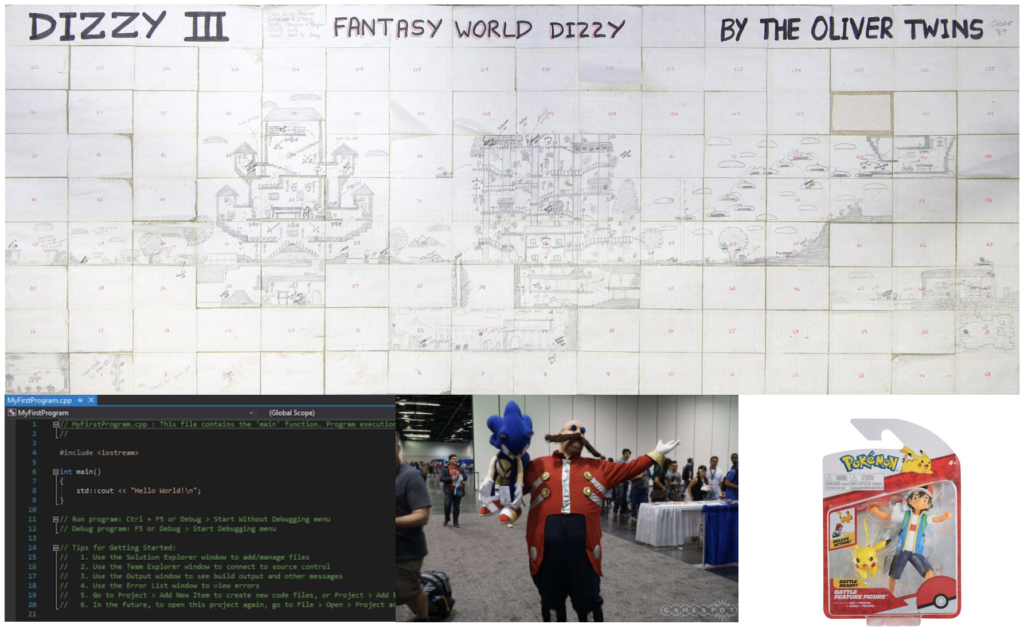
The formation of a distributed collection would be a collaborative creation of a variety of ‘homes’ to a mass of videogame material such as merchandise, code, and developmental materials — even this small list of ephemera is just the tip of the iceberg of the forms of digital game heritage that could be collected.
Organisations currently collecting videogame-related material within their specific remits would continue to do so. (For example, the V&A could collect videogame cosplay costumes within their own Costumes Collections.)
In the view of the VHS, the formation of a distributed collection of videogame materials is a crucial step towards more effective and long-lasting preservation practices.
2. MAPPING WHERE COLLECTIONS EXIST
One of the biggest challenges for digital game preservation is understanding where collections are actually located.
This is why the VHS advocates for the creation of an open and accessible digital map where anyone from private collectors to large institutions can pinpoint and describe their collections.
In concept, this map could build on the stellar foundational work of Ukie’s ‘UK Games Map’ as seen below.

By creating a collaborative and evolving ‘UK Game Collections Map’ we can ensure that the preservation of digital game heritage is both focused on the breadth of materials as well as the depth of personal expertise and accumulated knowledge.
The creation of this map could also be a useful reference tool in line with the creation of a distributed collection of videogame preservation.
3. INNOVATION IN EXHIBITION, USING EMULATION
Emulation is not the enemy. The VHS recognises the utility of emulation as a functional and multi-faceted tool that can deeply enhance how we play and understand our digital game pasts.
Internationally there are initiatives to integrate emulated experiences within public exhibition and research library contexts as a way to legally access versions of historic games for research & learning purposes and the advancement of public knowledge.
Let’s work together to recognise the potential of emulation to reshape our collective understanding of videogame history and better preserve a playable past.