Giulia Carla Rossi is a researcher, curator and artist based in London. She is Curator for Digital Publications at the British Library, working in the department of Contemporary British & Irish Collections. Her research interests include curating digital collections and exhibitions, digital preservation, electronic literature, net art, visual poetry and creative computing. In her creative work she uses digital tools to create storytelling experiences that explore language, queerness and archival practices. She co-curated the 2023 exhibition Digital Storytelling at the British Library.
Emerging Formats started as a project in 2017, when the British Library, together
with the other five UK Legal Deposit Libraries, began investigating the rise of new
complex digital publications that could pose new opportunities and challenges for
libraries and other cultural institutions in terms of collection and preservation.
These are born-digital publications that are technically and structurally more
complex than more standardised format types; they are often comprised of a mix of media and make use of the affordances of technology to deliver a narrative (they
don’t just use technology features as an add-on).
Through the years, the collection has grown to include examples of eBook mobile apps, web-based interactive narratives and the various contextual information and documentation that surrounds these publications.
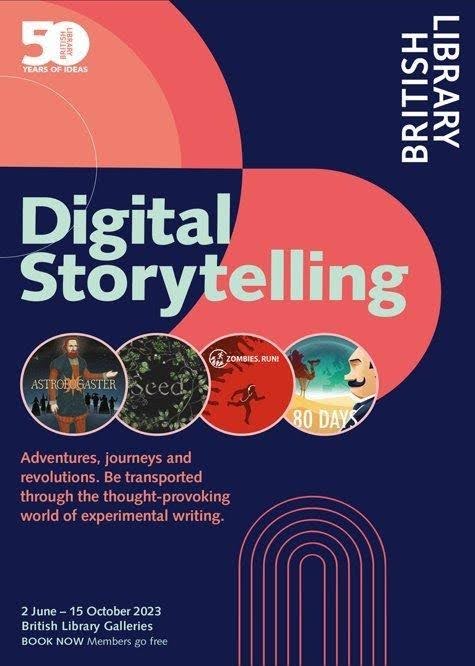
In 2023, the Library launched Digital Storytelling, an exhibition which showcased
eleven different born-digital works, including interactive narratives that respond to
user input, reading experiences personalised by data feeds, and immersive
multimedia story worlds developed through audience participation.
We wanted to investigate the impact of technology on writing and reading and how
interactive narratives can respond to the presence of the reader within the story. It
was also a chance for us to better understand our users’ needs when it comes to
interacting with born-digital works in a physical environment.
As mentioned above, contextual information refers to all the material surrounding a publication that can help describe how a publication was used, as well as the context it was originally published in and the original look and feel of the publication. It can consist of a variety of things: interviews with the authors or users/ playthrough videos/ screenshot images etc.
The reason why we want to collect contextual information is that this type of
documentation is very helpful to fill in the gaps of publications that couldn’t be
collected in their entirety or that have lost some of their original functionalities – and might be the only option for those publications that are no longer accessible.
We have been collecting contextual material directly from publishers and authors,
but in the run up to Digital Storytelling we also experimented with creating some of
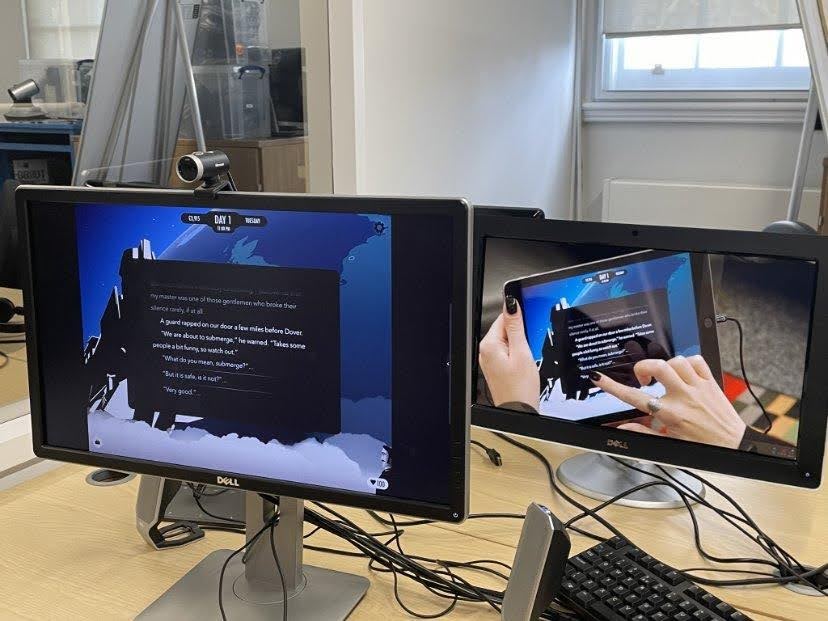
these materials ourselves. We filmed short playthrough videos for 3 of the stories we included in the exhibition. The idea was to create videos that in less than 2 minutes would give viewers an idea of what the narrative was about, some of the core themes of the work, as well as the main interactions and gestures you’d need to read the narrative.
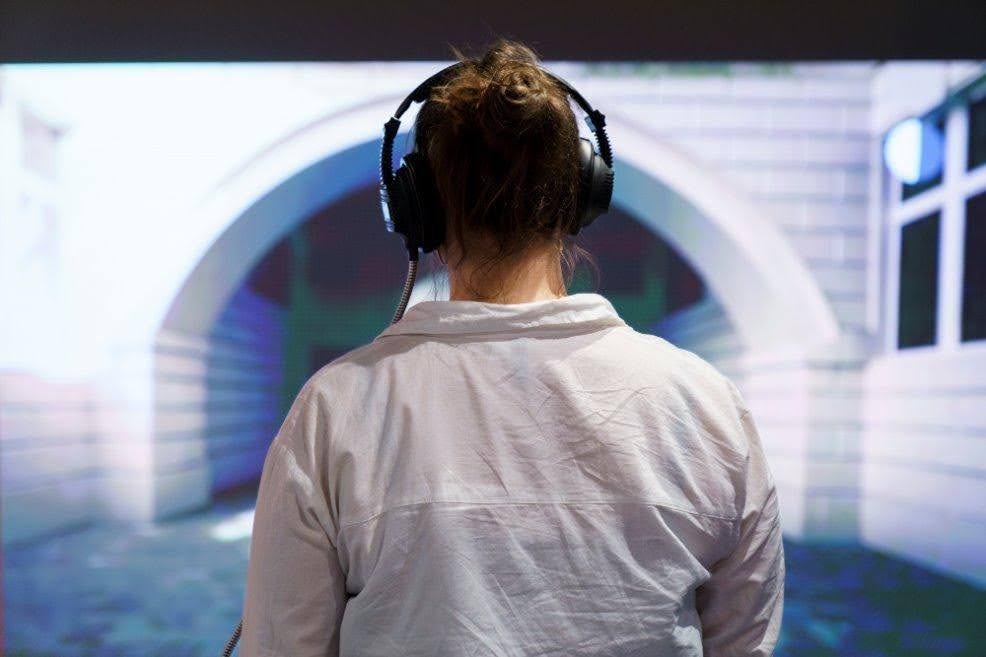
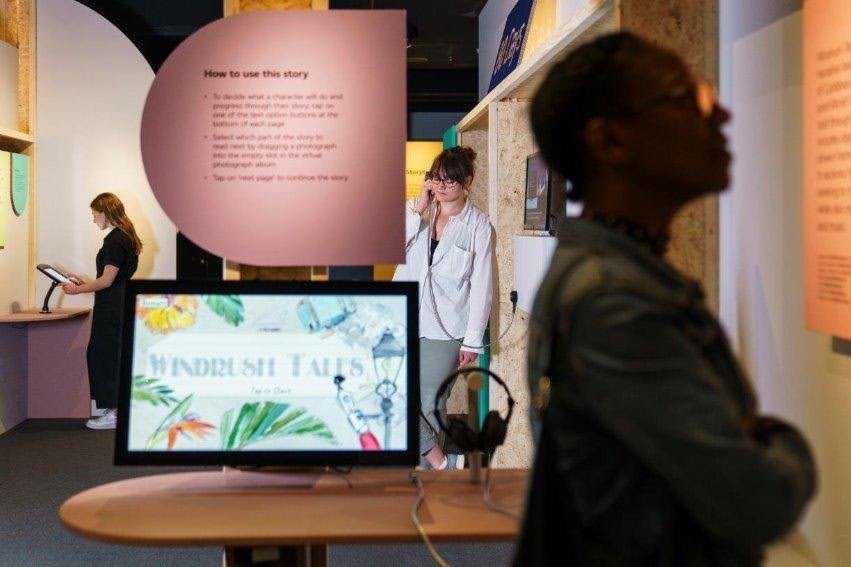
In the gallery, these videos worked as actual instructions on how to use the playable version of the games we exhibited, but they’re also valuable research items in their own right. The contextual material produced for the exhibition also includes interviews with some of the artists, writers and authors of the interactive narratives in the exhibition, in which they would talk about their practice, their artworks and what digital storytelling meant to them.
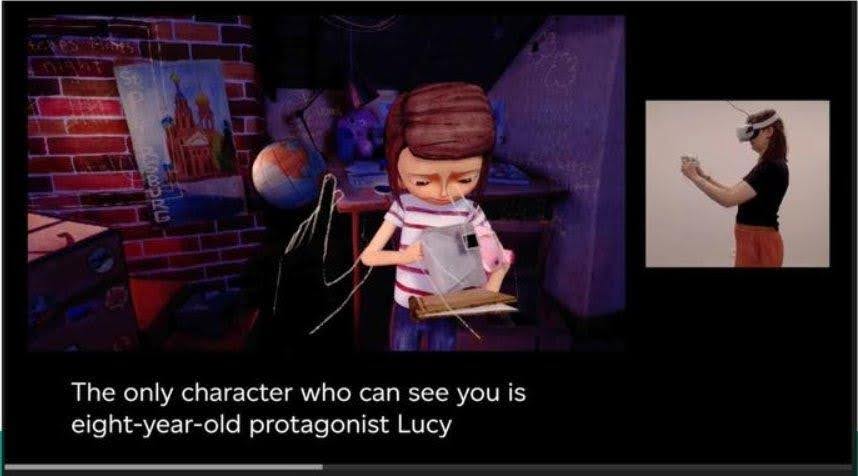
Working on the exhibition was a great opportunity to promote and understand how to present and collect Emerging Formats. We’ve learnt a lot by collaborating closely with authors and creators, including what the core aspects of their work are and how we can present them to our audience.
The post-exhibition feedback we conducted revealed that interactivity was an
important aspect of the exhibition, with over half of the respondents stating that they engaged with all the stories. Specifically, the majority of visitors reported that the playthrough videos and the video interviews improved their experience of the
exhibition. This feedback was very helpful in guiding our collecting activities to
continue collecting contextual material to support use and preservation over the long term.
Finally, in terms of facilitating access, we’ve been thinking of how to best provide
access to the material that we created for the exhibition outside of exhibition settings. To this end we have created a dedicated collection on the British Library Research Repository for the assets created for the Digital Storytelling exhibition. At the moment of writing, this includes video interviews with writers and creators of some of the narratives exhibited, the interpretation guide and a few press photos.
This is a way to grant researchers and any other users remote access to the
materials we created for the exhibition, as well as the possibility of reusing them
under CCBY licence.
Leave a Reply