The following case study was presented at a Videogame Heritage Webinar on 11th June 2026 by Ann Wain. Ann is the Collections Officer at the National Videogame Museum, Sheffield.
After the presentation, Conor Clarke, Marketing Executive and Community Manager at ustwo games, took part in a Q&A. Selected comments from the session are shared after the case study.
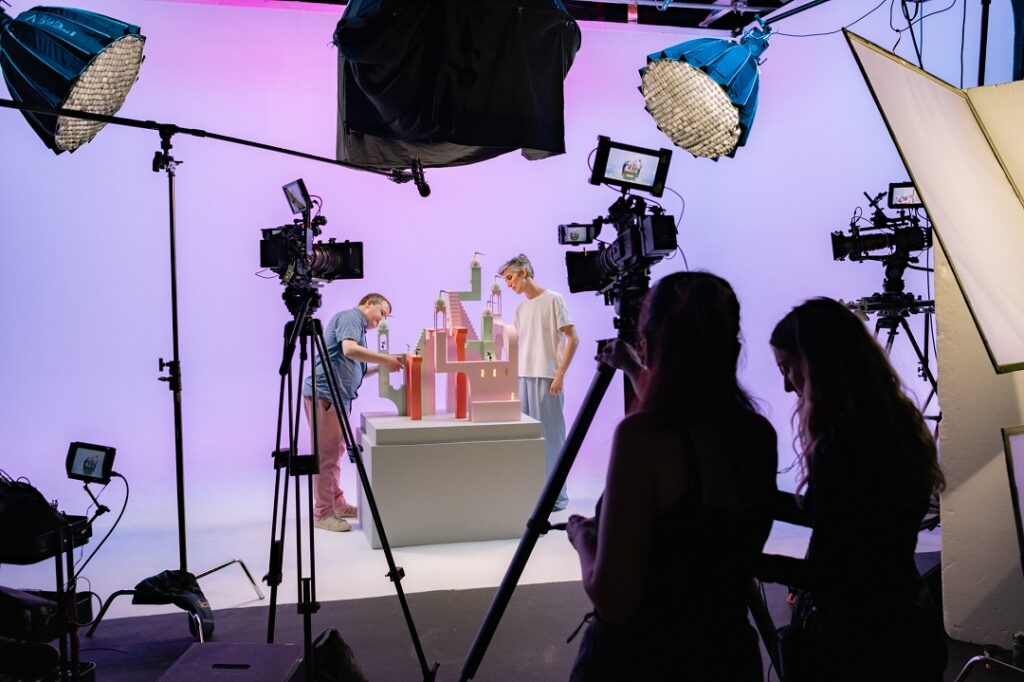
Physical model of level ‘The Thief’ from Monument Valley, 2024
Commissioned by YRS TRULY for ustwo games
Phoebe Shakespeare (Production Designer), Nate Gibson (Model-maker and 3D Draughtsperson), Charlotte Henery (Draughtsperson), Helen Hebert (Assistant Model-maker)
Background
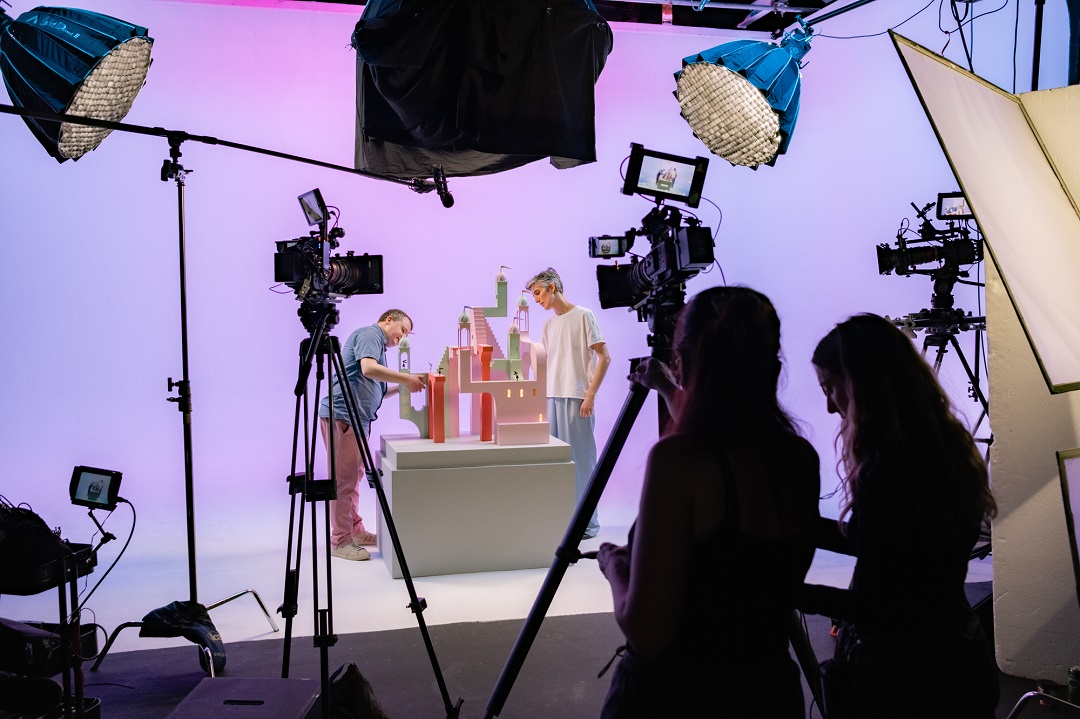
The creators of the Monument Valley videogame series, ustwo games, asked marketing company YRS TRULY to commission a physical interpretation of a level from the games for a promotional video for their partnership with Netflix. The model would reflect the games’ impossible architecture and include moving parts concealing questions for the developers about the impact and future of the series. Nate, Phoebe, Charlotte, and Helen created the model in 2024.
The video, ‘What’s next for Monument Valley? Monument Valley Diaries’, released on YouTube on 8 November 2024, shortly before the release of Monument Valley III.

For anyone unfamiliar with the games, the Monument Valley series involves navigation of puzzles composed of M.C. Escher-style impossible objects and optical illusions. The player can extend and retract platforms, move floors up and town, twist columns, and more to guide the main characters through the levels. The model itself is, of course, restricted by Earth physics in a way the game world is not. However, it nonetheless incorporates angles and moving parts which demonstrate the types of mind-bending structures and movement included in the game. The specific colours, shapes, and designs for the model are taken from Appendix III of the original Monument Valley. This level is titled ‘The Thief, because the premise of the level is that Ida, the main character, needs to retrieve her pointy hat from one of the crows who has stolen it.
Nate Gibson, the model-maker and designer, reported that the model was not built with the expectation that it would last or be preserved past its use in making the video. After the filming, the model itself remained largely intact, but several elements, including the small figures of Ida and the crows, were lost. An acrylic sign cut to read ‘MONUMENT VALLEY II’ was also added to the model at some point, although the level used as basis for the model is from the original Monument Valley and the video was in part a promotion of Monument Valley III.
At some point after the filming, the model came into the possession of the organisers of London Games Festival. It was displayed with the acrylic sign, but without the small figures, at the Festival in April 2025. Several staff from the NVM (including myself) attended London Games Festival for the ‘A Decade of Gaming’ anniversary event and to present some objects for the Joystique Roadshow (which was a little bit like Antiques Roadshow, but with a videogame twist). While at the event, we viewed the model and became interested in displaying it at the museum.

After some discussion with London Games Festival, YRS TRULY, and ustwo games, it was agreed that the NVM would become the permanent home of the model. John O’Shea, the museum’s Creative Director and co-CEO, collected the model from the London Games Festival offices on 6 August 2025 and transported it to the NVM. On arrival, I condition checked the model and reconstructed it as much as possible, using the video as a reference. I also completed the appropriate object entry and inventory documentation and accessioned the model into the catalogue. The model was largely in good condition, but required some restoration due to wear and tear and missing elements. You can see from the photo below that the pieces had been moved around on the base for packing and transport and were not in their original positions.
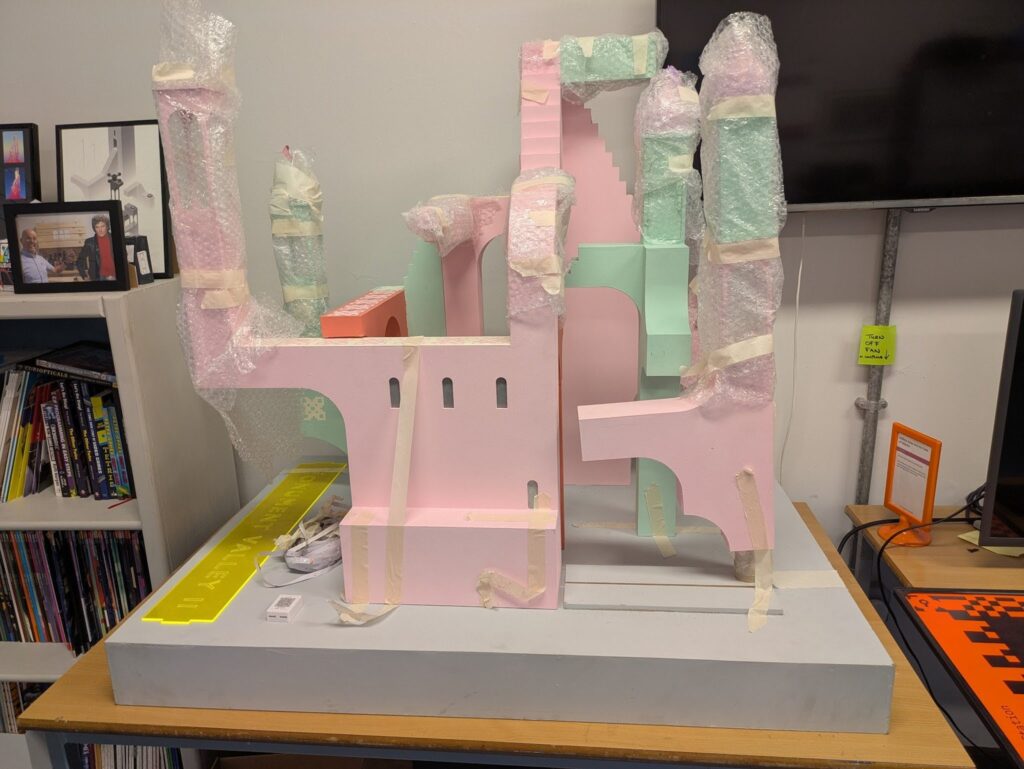
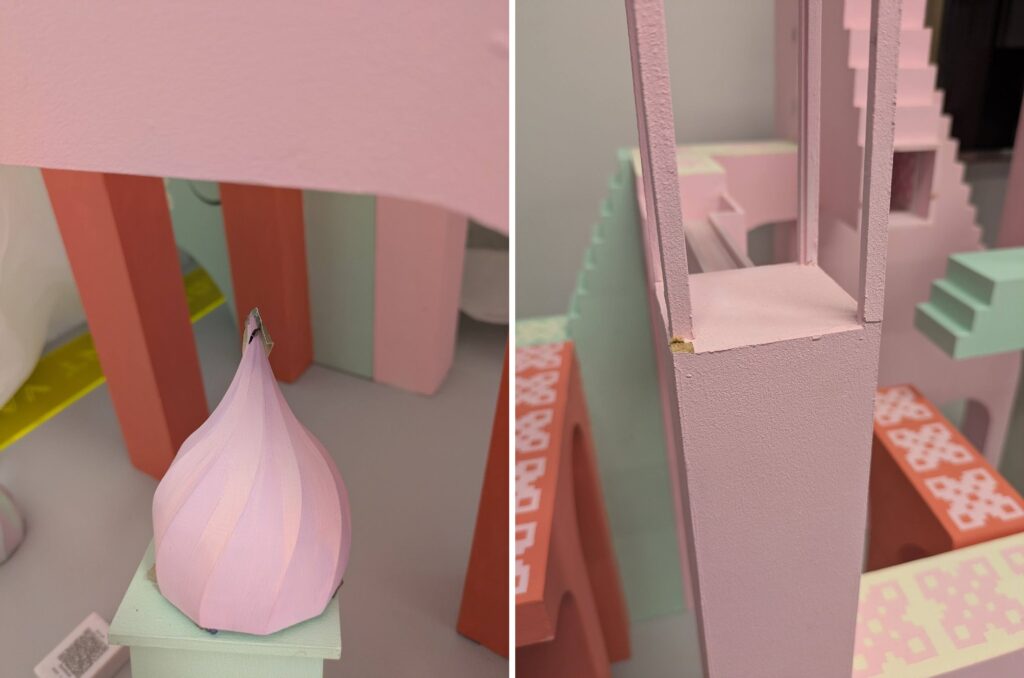
These two photos taken during the condition check show some of the more significant areas of damage when the model arrived at the NVM. On the left you can see where some of the thin pillars near the top of a tower have been cracked and moved out of place. On the right, one of the domes has moved from its place, removing some paint beneath; and there is a crack to the resin at the tip of the dome. Most of the model is made with wood or fibreboard, but some elements, including the domes, were 3D-printed from resin.
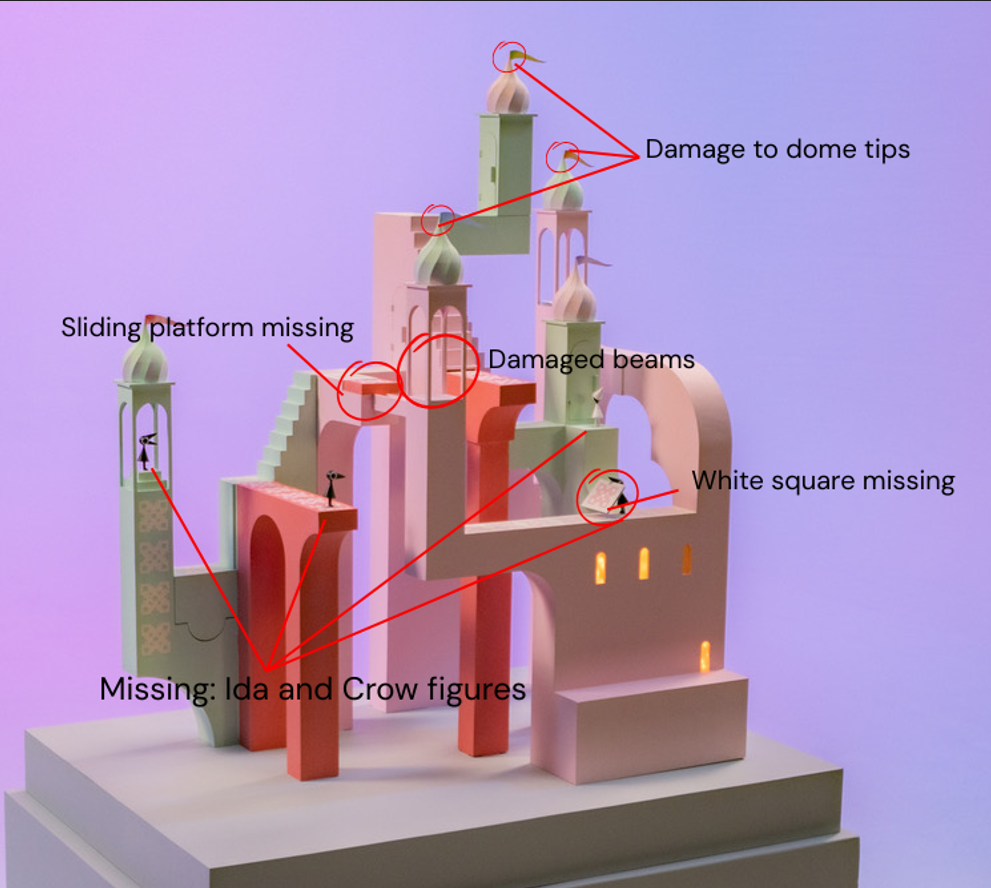
John reached out to the model’s original creators via YRS TRULY and we were able to commission Nate Gibson to come to Sheffield for conservation work on the model in December 2025. Nate reprinted the missing 3D-printed figures of Ida and the crows and replaced a sliding platform which was missing. All surfaces were refreshed with a new coat of colour-matched paint. The cracks and breaks to some of the columns were repaired, and the tips of the domes were recreated using clay. The paper pennants were secured in place at the top of the domes, and the resin figures of Ida and the crows were placed onto the model using superglue and museum putty. Nate also provided the museum with spare figures of Ida and the crows and the leftover paint, should we need to make any minor repairs in the future.
The NVM ordered a custom-built display case to house the model, which arrived shortly after the repairs were completed. The NVM’s technician made minor alterations to the lights inside the front structure to permit the model to be illuminated while on display without needing to be connected to a mains plug.

The model debuted in pride of place in a Monument Valley trilogy exhibit unveiled for Christmas 2025, alongside all three of the Monument Valley videogames. We expect the model to remain on display as a star of our collection for the future.
As a museum, the NVM are committed to preserving videogames as much as we can. Keeping games playable is, of course, a key part of that work, but it doesn’t tell the whole story. Collecting material objects like the Monument Valley model, as well as social histories in the form of player memories, game-inspired creations like zines or cosplay, developer diaries, magazines, and videos of gameplay are also important elements of videogame preservation. They all provide social and historical context, personal touchstones, and evidence of games’ impact before, during and after their creation. All of this serves to build a more complete picture of videogames as artworks and their place in contemporary life.
Q&A with Ann Wain and Conor Clarke
Why is it important to have this sort of object (the Monument Valley model) displayed in the museum alongside games you can play?
AW: Partly it’s because no matter how much we can reconstruct old games and old tech to make and keep games playable, there’s certain things you’re never going to be able to reproduce. For example, in a massively multiplayer online space, you’re not going to be able to reproduce the sense of social interaction or the community in the way that you would have when the game was being played in its originality, so one of the things we need to do is collect context, collect things outside of the narrow focus of the game itself, and look at what the game inspired. What inspired the game itself?
Nothing is created in a vacuum. What did Monument Valley inspire other people to create? Things become memes, things go viral, they become a trend so it’s about looking at how this impacted the things that came after it. The model is one of the ways to show something that people made to talk about these games. It also highlights the interaction between the digital world and the real world and how they both impact each other.
I think both of those ways, collecting context and showcasing how videogames are more than just an image on a screen, are important. It has social and cultural impact and physical, tangible things that go along with it which are valuable to preserve, remember and analyse.
ustwo games have collaborated with the National Videogame Museum and other cultural institutions like the V&A on sharing insights into your work. How do you go about getting videogames into cultural contexts?
CC: ustwo games actually span out of a design studio called ustwo design and back in the early 2010s the studio was all about creating exciting digital products and exploring what could be done in design spaces, in web spaces, and then in games like Whale Trail. Then they decided that they had a bunch of artists who wanted to create really cool stuff and challenge what was being done in the game sphere back then and they ended up creating Monument Valley. So historically ustwo games comes from an artist-led background and that core artistic principle has remained.
What do you think about the representation of games within wider culture? Do you think they’re getting a fair representation within the mainstream culturally?
CC: Historically, ustwo games was a mobile game studio. Whilst mobile gaming existed in 2014, it was nowhere near as prominent as it is now. Culturally, gaming on your phone has never been seen as “real gaming”; it’s not the same as picking up a controller or a keyboard. So our audience has always been “non-gamers”, they’ve always been people that are potentially more mainstream. Ustwo games have always been tapped into that; our audience are people who love games alongside a bunch of different things.
It’s part of the reason why we wanted to start the Beautiful Games Club. We know that a lot of our audience are time poor and aren’t necessarily interested in keeping up with the release cycle of games. What they do want is to enjoy a nice interactive experience every now and then. So the Beautiful Games Club is intended to separate itself from traditional ways that we talk about games and is attempting to take a slightly slower approach to it.
The relationship between ustwo games and the National Videogame Museum has been in place for a long time. Why do you think it continues to work?
CC: There’s plenty of factors. One is our audience, who are made up of people in the art sphere, people that do a lot of design for example, so working with a museum makes total sense. Also the studio sees themselves as working inside those spheres as well. There’s the potential commercial consideration too, we genuinely think there is value in showcasing our work in those spheres as a way to reach those audiences. Late last year, alongside the exhibition of the model and the Monument Valley trilogy, we had Monument Valley 3 DLC coming out. From a marketing perspective you’re thinking about what kind of cool things you can do to break out of the game sphere to reach audiences in different ways.
Leave a Reply